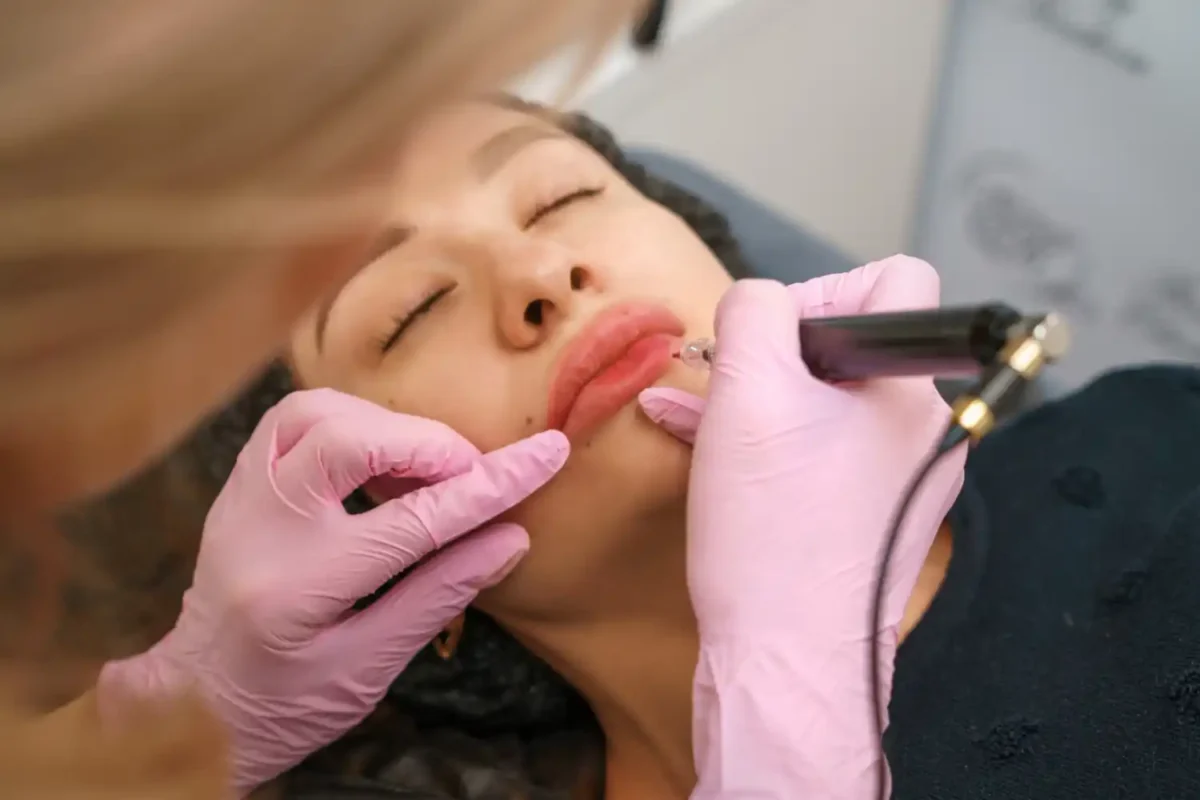
A HIFU face lift is a non-surgical treatment designed to improve the appearance of mild to moderate skin laxity. It uses focused ultrasound energy beneath the skin’s surface to trigger a controlled healing response and support collagen remodelling over time.
Unlike a surgical facelift, HIFU does not involve incisions, stitches or the physical removal of loose skin. Most people can return to their usual routine shortly after treatment, although temporary redness, tenderness, swelling or sensitivity can occur.
The results are gradual rather than instant. Some people notice an early feeling of firmness, but more visible changes commonly develop over the following weeks and months as the skin responds to treatment.
This guide explains how a HIFU face lift works, which areas may be treated, what results you can realistically expect and how much downtime may be involved.
What Is a HIFU Face Lift?
HIFU stands for high-intensity focused ultrasound. In aesthetic treatments, ultrasound energy is directed at selected depths beneath the skin to create small, controlled points of heat within targeted tissue.
This controlled thermal effect is intended to start a repair response that includes collagen contraction and longer-term collagen remodelling. The surface of the skin is not cut or surgically lifted.
HIFU may be used to improve the appearance of:
- Mild skin laxity
- A less defined jawline
- Early jowling
- Loose-looking skin beneath the chin
- Fine lines around selected facial areas
- Mild neck laxity
- Reduced firmness around the cheeks
- Some brow or lower-face concerns
Clinical reviews suggest that focused ultrasound can produce moderate improvements in facial and neck rejuvenation for appropriately selected patients. However, study methods and treatment protocols vary, and results are not identical for everyone.
The term “HIFU face lift” is widely used, but the treatment is not the same as a surgical facelift. A more accurate description is non-surgical ultrasound skin tightening or lifting.
HIFU Face Lift at a Glance
| Treatment feature | What to expect |
| Treatment type | Non-surgical focused ultrasound treatment |
| Main purpose | To improve mild to moderate skin laxity and firmness |
| Common areas | Jawline, lower face, cheeks, chin and neck |
| Treatment time | Depends on the areas treated and device used |
| Anaesthetic | Often unnecessary, although comfort measures may be offered |
| Initial changes | Some people notice early firmness |
| Developed results | Commonly assessed after approximately two to three months |
| Downtime | Usually limited, but temporary reactions can occur |
| Number of sessions | Depends on the device, skin condition and treatment plan |
| Result duration | Variable; maintenance may be recommended |
These are general expectations rather than guarantees. A consultation is necessary to determine whether HIFU is suitable for your skin, facial structure and goals.
How Does a HIFU Face Lift Work?
HIFU uses concentrated ultrasound energy to reach selected layers beneath the skin.
The energy is not spread evenly across the entire treatment area. Instead, it is delivered as multiple focused points at controlled depths. These points briefly heat targeted tissue while aiming to leave the surrounding surface relatively undisturbed.
Research into microfocused ultrasound describes the formation of small thermal coagulation points within deeper tissue. These points initiate a healing cascade associated with new collagen formation, collagen reorganisation and changes in tissue firmness. Different treatment depths may be selected according to the area and intended result.
The treatment process generally involves four stages
- Consultation and facial assessment
Before treatment, the practitioner should examine:
- The location and degree of skin laxity
- Facial shape and underlying structure
- Skin thickness
- Areas of volume loss
- Previous cosmetic procedures
- Medical history
- Current medication
- Treatment expectations
This stage matters because not every apparent sign of ageing is caused by loose skin.
For example, reduced jawline definition may also be influenced by facial fat, bone structure, muscle activity, volume loss or submental fullness. HIFU cannot correct every one of these concerns.
- Mapping the treatment areas
The practitioner identifies the areas where ultrasound energy will be delivered.
Treatment may be adapted around:
- The jawline
- Lower cheeks
- Under the chin
- The neck
- The brow area
- Selected facial contours
Areas containing important nerves, blood vessels or delicate structures require careful assessment and appropriate technique.
- Delivering focused ultrasound energy
A conductive gel is applied, and the handpiece is moved across the planned treatment zones.
Depending on the device, cartridges or settings may be used to reach different depths. The practitioner delivers a series of ultrasound lines or pulses according to the treatment plan.
The experience can vary from warmth or tingling to brief, sharp or prickling sensations. Areas close to bone, such as the jawline, may feel more intense.
A 2023 meta-analysis reported an overall average pain score of approximately three on a ten-point scale, although individual studies and patient experiences varied considerably. Another lower-face study reported higher average discomfort in the cheek, under-chin and jaw areas, showing that the treatment should not automatically be advertised as painless.
- Collagen remodelling after treatment
The treatment does not finish working when the appointment ends.
The controlled thermal response is intended to stimulate gradual changes within the treated tissue. Collagen remodelling takes time, which is why developed results are usually assessed weeks or months later rather than immediately.
Which Layers Does HIFU Target?
Different aesthetic ultrasound devices may deliver energy at different depths.
Depending on the system and treatment plan, energy may be directed towards:
- The deeper dermis
- Subdermal tissue
- Superficial connective tissue layers
- Areas associated with structural facial support
Some HIFU marketing refers to the superficial musculoaponeurotic system, commonly called the SMAS. This is a connective tissue layer also considered during surgical facial procedures.
However, reaching or influencing a similar anatomical layer does not make HIFU equivalent to surgery. A surgical facelift can reposition tissue, remove excess skin and create substantially more dramatic structural changes. HIFU cannot reproduce those surgical actions.
What Areas Can Be Treated With Facial HIFU?
HIFU is commonly considered for the lower face and neck, where early laxity may affect facial definition.
Jawline and jowls
Focused ultrasound may help improve the appearance of mild laxity around the jawline. The objective is usually a firmer and more defined look rather than a dramatic change in facial shape.
Pronounced jowling or substantial loose skin may require a different treatment approach.
Under the chin
The area beneath the chin may be treated when the concern involves loose-looking skin.
HIFU is not automatically a fat-reduction treatment. When fullness beneath the chin is mainly caused by fat rather than laxity, another procedure may be more appropriate.
Cheeks and lower face
HIFU may be used to support firmness in selected areas of the lower cheeks. Careful planning is important, particularly for clients who already have facial hollowing or limited facial volume.
An unsuitable treatment plan may not address the true cause of the concern.
Neck
Mild neck laxity and fine lines may be treated, although the response depends on skin quality and the amount of excess tissue.
More advanced neck ageing may not respond sufficiently to a non-surgical procedure.
Brow and eye area
Some devices and treatment protocols may be used around selected brow or periorbital areas. These regions require particular caution because of their anatomy.
A 2026 systematic review found reported improvements in several periorbital measurements, but it rated the certainty of the available evidence as very low because the studies were heterogeneous and mainly non-randomised.
Treatment around the eyes should only be carried out using an appropriate device, setting and technique.
What Results Can You Expect From a HIFU Face Lift?
HIFU results are generally intended to look gradual and natural.
Depending on the treatment area and individual response, possible changes may include:
- Firmer-looking skin
- Improved lower-face definition
- A more refined-looking jawline
- A mild lifting effect
- Reduced appearance of minor laxity
- Smoother-looking skin
- A modest improvement in some fine lines
The key word is modest. HIFU may produce a noticeable improvement for a suitable client, but it should not be presented as a guaranteed replacement for facelift surgery.
A systematic review and meta-analysis covering 17 studies and 477 participants found a moderate overall effect for face and neck rejuvenation. Another meta-analysis reported measurable response and satisfaction at 90 and 180 days, although the strength of results varied among the studies.
HIFU is more likely to suit people with:
- Early signs of facial laxity
- Mild to moderate loss of firmness
- Realistic expectations
- Sufficient underlying facial support
- A preference for gradual changes
- No expectation of surgical-level lifting
HIFU may be less suitable when there is:
- Substantial loose skin
- Advanced jowling
- Significant neck laxity
- Major facial volume loss
- A need for dramatic repositioning
- An expectation of instant transformation
A consultation should distinguish skin laxity from fat distribution, volume loss and changes in bone structure. Otherwise, the treatment may be technically successful but still fail to address what is actually bothering the client.
When Do HIFU Results Appear?
Some people report an immediate sensation of tightness or notice a small early change after treatment. This may relate partly to initial collagen contraction and temporary tissue responses.
However, the main result should not be judged on the day of treatment.
A more realistic timeline is:
Immediately after treatment
The skin may feel tighter, warm or tender. Mild redness or swelling may be present. Any visible lifting at this stage may be subtle.
During the first few weeks
The treated area settles, and early changes may begin to become noticeable. Results are still developing.
Around two to three months
This is a common point for reviewing the outcome because collagen remodelling has had more time to occur. Several clinical studies assess HIFU outcomes at approximately 90 days.
Up to six months
Changes may continue to develop or stabilise over several months. The timing varies according to the device, treatment settings, age, skin quality and individual healing response.
HIFU is therefore poorly suited to anyone seeking an instant result immediately before an important event. The skin is not a microwave meal; collagen takes its sweet time.
How Long Do HIFU Face Lift Results Last?
The duration of HIFU results varies between individuals.
Factors that may influence longevity include:
- Age
- Skin quality
- Degree of laxity
- Treatment depth and energy
- Number of treatment lines
- Device type
- Lifestyle
- Smoking
- Sun exposure
- Weight changes
- Natural ageing
- Individual collagen response
Results are not permanent because HIFU does not stop the ageing process.
Some clients may consider maintenance treatment after their results have developed and begun to reduce. The timing should be decided after reassessment rather than automatically booking repeated treatments at very short intervals.
Over-treatment should be avoided. More ultrasound energy or more frequent appointments do not necessarily create a better or safer result.
How Many HIFU Sessions Are Needed?
There is no single session schedule that applies to every HIFU device or every client.
Some treatment systems are commonly used as a single initial session followed by review. Other protocols may recommend a course of appointments. Treatment frequency depends on:
- The specific machine
- Manufacturer guidance
- Energy delivered
- Treatment depth
- Number of lines or pulses
- Area being treated
- Severity of laxity
- Previous response
- Practitioner assessment
Asmara Clinic’s current service information lists VMAX 12 ICE HIFU and 5D HIFU among its non-surgical face and body lifting options. Because machines and protocols differ, the number and spacing of sessions should be confirmed for the particular device selected rather than copied from generic online advice.
The safest approach is to complete the recommended session, allow sufficient time for results to develop and attend a review before deciding whether further treatment is appropriate.
Is There Any Downtime After a HIFU Face Lift?
HIFU generally involves less recovery time than surgery because the skin is not cut and there are no stitches.
Many people can return to normal daily activities shortly after treatment. However, describing HIFU as having absolutely no downtime can be misleading because temporary reactions are possible.
You may experience:
- Redness
- Mild swelling
- Tenderness
- Tingling
- Sensitivity when touching the area
- A warm or tight feeling
- Mild bruising
- Temporary numbness
- Short-lived discomfort along the jaw or treatment lines
These effects are commonly mild and temporary in published research, but experience varies. Reviews have reported redness, swelling, pain and occasional bruising as common short-term reactions.
By comparison, a surgical facelift generally requires a much longer recovery period. The NHS advises that recovery from facelift surgery may take approximately two to four weeks, with bruising lasting at least two weeks and final results taking several months to become clear.
This difference in recovery is one of HIFU’s main attractions, but it does not mean the two procedures deliver comparable results.
What Are the Possible Risks and Side Effects?
Focused ultrasound systems should be operated carefully because they deliver energy beneath the visible surface of the skin.
The US Food and Drug Administration identifies potential risks associated with focused ultrasound aesthetic devices and requires manufacturers to address safety issues through device design, testing, labelling and appropriate controls.
Potential adverse effects may include:
- Pain
- Redness
- Swelling
- Bruising
- Temporary numbness or altered sensation
- Tenderness
- Welts or raised areas
- Temporary weakness in a nearby muscle
- Burns
- Unwanted tissue effects
- Nerve-related symptoms
- Uneven or unsatisfactory results
Serious complications appear uncommon in the published facial-rejuvenation literature, but uncommon does not mean impossible.
Risk depends partly on:
- Device quality
- Correct cartridge selection
- Energy settings
- Accurate treatment depth
- Knowledge of facial anatomy
- Practitioner training
- Treatment mapping
- Honest patient selection
Seek prompt advice from the provider if you develop severe pain, blistering, weakness, marked swelling, persistent numbness, visual symptoms or any reaction that causes concern.
Who Should Not Have a HIFU Face Lift?
Suitability must be assessed individually.
Treatment may need to be delayed or avoided when there is:
- An active skin infection
- Open wounds in the treatment area
- Significant inflammation
- Severe acne across the planned area
- Recent surgery or an incompletely healed procedure
- Certain implanted devices
- Metal or medical implants in or near the treatment area
- A medical condition affecting healing
- Altered sensation in the area
- Pregnancy or breastfeeding
- A history or medication requiring additional clinical assessment
This is not a complete contraindication list. Suitability depends on the device manufacturer’s guidance, the area being treated and the client’s medical history.
Tell the practitioner about all medicines, health conditions, dental work, implants and previous aesthetic treatments before proceeding.
What Happens During a HIFU Appointment?
A typical appointment may include:
Consultation and consent: Your goals, medical history, previous treatments and suitability are reviewed.
Facial assessment: The practitioner examines skin laxity, facial volume and treatment areas.
Photography: Standardised photographs may be taken to support an accurate comparison later.
Skin preparation: Makeup and skincare products are removed.
Treatment mapping: The practitioner marks or plans the areas where energy will be delivered.
Application of ultrasound gel: This helps the handpiece maintain contact with the skin.
Energy delivery: The device is moved across the selected areas while focused ultrasound pulses or lines are delivered.
Post-treatment assessment: The skin is checked, aftercare is discussed and a review may be arranged.
Treatment time depends on the size and number of areas being treated. A small jawline procedure may be shorter than a combined face and neck treatment.
What Should You Do After HIFU?
Always follow the aftercare provided for the device and treatment you received.
General advice may include:
- Treat the skin gently
- Avoid rubbing or massaging tender areas unless instructed
- Use suitable sun protection
- Avoid excessive heat if the skin feels sensitive
- Delay strong exfoliating products until advised
- Keep the skin hydrated
- Avoid adding several new active products at once
- Contact the clinic if a reaction worsens or persists
- Attend the recommended review appointment
Do not judge the final result from photographs taken immediately after treatment. Consistent lighting, facial position and camera distance are necessary for a meaningful before-and-after comparison.
Can HIFU Be Combined With Other Treatments?
HIFU may form part of a broader facial treatment plan, but not every procedure addresses the same problem.
For example:
- Dermal fillers mainly restore or alter volume
- Anti-wrinkle injections affect selected muscle movement
- Skin boosters focus on skin quality and hydration
- Laser treatments may address surface texture or pigmentation
- Radiofrequency treatments use a different form of energy
- Surgical procedures can reposition or remove tissue
Combining treatments should not mean performing everything at once. The order and spacing depend on the areas treated, the procedure type and the person’s anatomy.
A practitioner should first identify whether the main concern is laxity, volume loss, muscle movement, pigmentation, texture or fat distribution. That diagnosis guides the treatment plan.
HIFU Face Lift Versus Surgical Facelift
HIFU and surgery should not be treated as interchangeable options.
| HIFU face lift | Surgical facelift |
| Non-surgical procedure | Surgical operation |
| No incisions | Requires incisions |
| Gradual, generally modest change | More significant structural lifting |
| Usually limited downtime | Several weeks of recovery |
| Does not remove excess skin | Can remove excess skin |
| Results vary and are temporary | Longer-lasting but not permanent |
| Usually suited to earlier laxity | May address more advanced laxity |
| No general anaesthetic in most cases | Anaesthesia is normally required |
Someone with mild laxity who wants a gradual improvement may prefer HIFU. Someone with substantial loose tissue and a desire for a dramatic result may need to discuss surgical options with an appropriately qualified surgeon.
How to Choose a HIFU Provider
The machine matters, but the person operating it matters just as much.
Before booking, ask:
- Which HIFU device will be used?
- Is it intended for facial aesthetic treatment?
- What training has the practitioner completed?
- How is treatment depth selected?
- Will my facial anatomy be assessed?
- What side effects and complications are possible?
- What results are realistic for my degree of laxity?
- What happens if I experience a complication?
- Are consultation, consent and aftercare included?
- When will my results be reviewed?
Be cautious of providers promising painless treatment, immediate surgical-level results, permanent lifting or guaranteed outcomes.
Professional treatment planning is not about firing the maximum number of shots at someone’s face and hoping collagen receives the memo.
HIFU Face and Neck Treatments at Asmara Clinic in Glasgow
Asmara Clinic offers non-surgical HIFU treatments for the face, neck and selected body areas from its clinic in Gorbals, Glasgow.
The clinic’s current treatment information includes VMAX 12 ICE HIFU and 5D HIFU options. Treatment areas may include the jawline, cheeks, neck and other areas affected by loose-looking skin, depending on individual suitability.
Because HIFU settings, treatment depths and session plans vary, clients should receive an assessment before deciding which option is appropriate.
Final Thoughts
A HIFU face lift uses focused ultrasound energy beneath the skin to support collagen remodelling and improve the appearance of mild to moderate laxity.
The treatment does not involve incisions, and most people require little interruption to their normal routine. Nevertheless, temporary redness, swelling, tenderness, tingling or numbness may occur, and the procedure is not completely risk-free.
Results usually develop gradually, with a meaningful review often taking place around two to three months after treatment. The outcome is generally subtler than surgery and depends heavily on patient selection, facial anatomy, device settings and practitioner technique.
A thorough consultation, realistic expectations and an appropriately planned treatment are more important than bold promises about an “instant non-surgical facelift.”